Born in London as Cicely Isabel Fairfield (she later adopted the spelling ‘Cicily’), ‘Rebecca West’ began to write under her penname, borrowed from the female protagonist of Ibsen’s Rosmersholm, in 1912. The first commentaries and reviews published under this by-line appeared in British papers associated with socialism and radical feminism, including the Freewoman, the Clarion and the Daily Herald. Subsequently, West became known as an idiosyncratic literary critic and outspoken political commentator, writing regularly for a range of British and American newspapers and magazines.
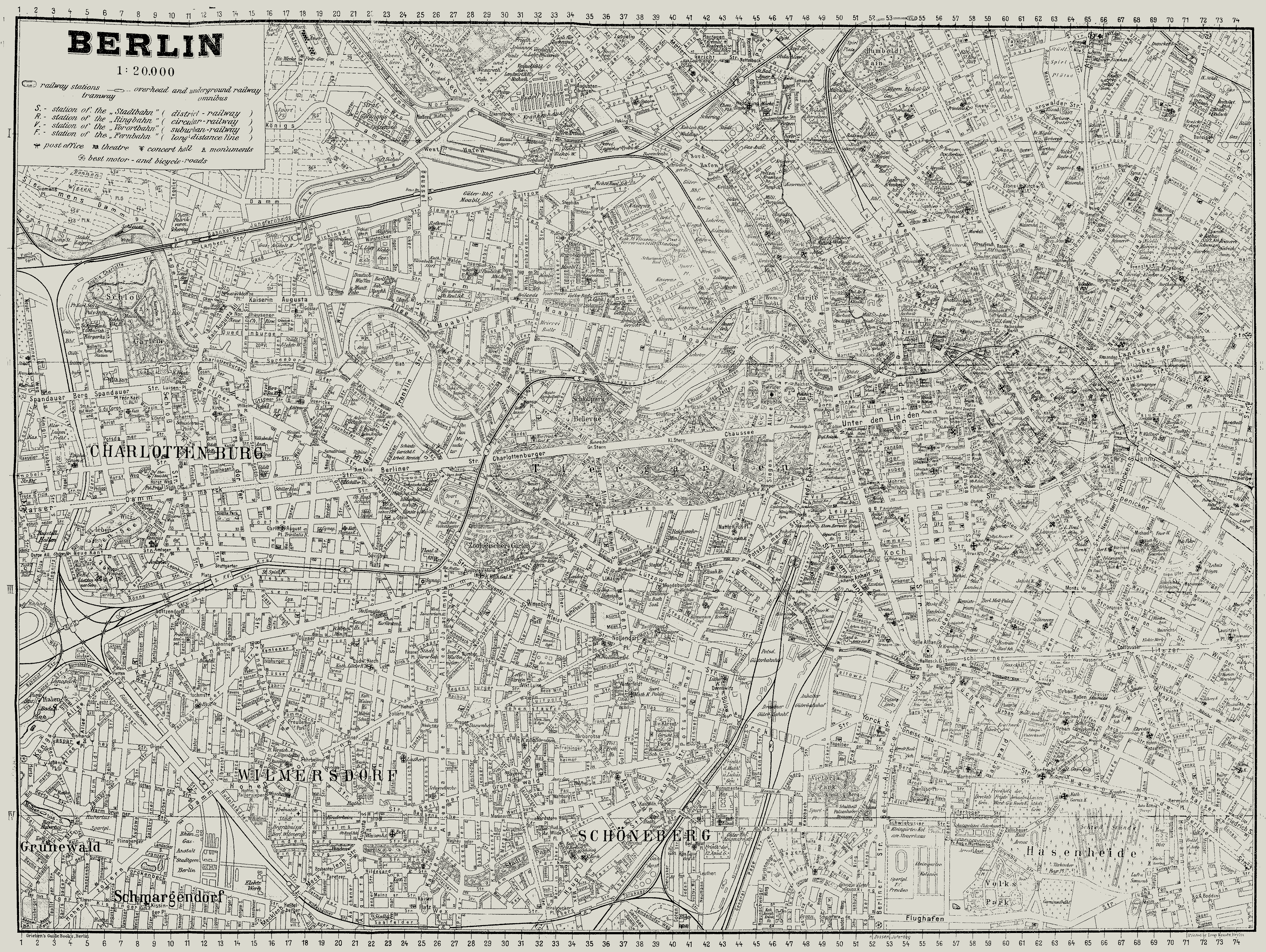
West’s initial connection to Germany came about through her husband Henry Andrews who had spent part of his youth in Hamburg and was employed by a private banking firm with German and Austrian business links. Following their marriage in 1930, West accompanied Andrews to Berlin ‘once every two months’ on business trips and family visits, becoming well-acquainted with the city and its inhabitants in the process. 1 Her initial assessment of both was damning, however, as she wrote to her sister Winifred in 1931: ‘I never loathed any place so much as Berlin. The people have all the bad characteristics of the Scotch without any of their virtues.’ 2 West was particularly irritated by what she perceived as the misplaced complacency of the Berliners who seemed to be ‘perpetually in a state of inflamed exaltation over their own commonsense and other people's lack of it.’ 3
West was acutely aware of the danger posed by this mental attitude in a country that seemed on the verge of electing a fascist government. In her newspaper column for the New York American, she warned against Hitler’s ‘crazy aggressiveness’ and commented on the narrow avoidance of disaster in the 1932 German elections. 4 ‘[I]f anyone wants to know what that election meant, what unwholesomeness it repudiated, let them read Dorothy Thompson’s “I Saw Hitler, ” a superb piece of journalism,’ West counselled her readers. 5 Some two years later, with the Nazis finally installed in power, Thompson’s vigorously anti-Hitler book would make her the first American journalist to be expelled from Nazi Germany.
West would return to the topic of German politics in a series of essays written after the end of World War II and (re-)published under the title ‘Greenhouse with Cyclamens’ in the 1955 collection A Train of Powder. Throughout these essays, which begin with West’s reports on the Nuremberg Trials for the New Yorker and end with her response to a book published by one of those acquitted, the city of Berlin emerges as a beacon of hope in postwar-Germany’s struggle with a different type of totalitarianism, represented for West by the Soviet Union.
The first essay in the series, written in 1946, describes the ‘horror of bombed Berlin’, comparing the aspect of the ravaged city to the degraded architectural grandeur of Piranesi’s Carceri d’Invenzione. 6 The life of the city’s inhabitants, as portrayed by West, appears equally unreal, with bookshops beginning to re-open in the lower parts of bombed-out buildings and cafés ‘crowded’ with customers nursing ‘glasses of pale liquid’. 7 While West is struck by the incongruent display of prosperity offered by some female Berliners who ‘wore better winter coats than we in England had seen for years,’ she also notes the ‘leathery faces’ of the women clearing up the bomb damage, whose bodies appeared as ‘a mixture of bones and crumpled stuffs like unrolled umbrellas, their lean hands hardly more like flesh than their tools’. 8
For West, it was above all in these impoverished but resolute women that Germany’s hope for a self-determined future after the war resided. In a follow-up essay, written in 1949, she thematises the growing tensions among the Allied Forces during their occupation of post-war Berlin, resulting in the Berlin blockade and airlift. West writes approvingly about the city’s inhabitants who consistently vote Social Democrat despite finding themselves surrounded by the Soviets and having little certainty of protection by the Western Allies in the long run. She especially lauds the tenacity of Berlin’s working-class women, who, even in the face of extreme hardship and deprivation, retained a strong sense of the value of ‘democracy and liberty’. 9
In West’s analysis of post-war Germany, Berlin thus becomes a key example of a political lesson learned: ‘The Nuremberg trials had not changed the Germans; the occupation of Western Germany had not changed the Western Germans; but Berliners were changed by the occupation of the city.’ 10 She reiterates this point in a third essay, written in 1954, noting that ‘[t]he Berliners were given two experiences of totalitarianism, which demonstrated that it was its principle which was wrong, and that no matter who applied it the result would be pain’. 11 For West, Russian Communism posed an equally serious threat to democracy in post-war Germany as the Nazi’s fascism had proven to be two decades earlier. Yet, where she had seen 1930s Berlin as representative of the political complacency that had allowed totalitarian forces to take hold of the country, she now considered the city a symbol of resistance and the birthplace of a new democratic spirit. Evi Heinz
1—Rebecca West to Motley Deakin, 21 April 1980, in Selected Letters of Rebecca West, ed. by Bonnie Kime Scott (New Haven: Yale University Press, 2000), p. 472.
2—Quoted in ibid., p. 127.
3—Quoted in ibid.
4— Quoted in Carl Rollyson, The Literary Legacy of Rebecca West (New York: Open Road Integrated Media, 2016). ProQuest Ebook Central.
5—Quoted in ibid.
6—Rebecca West, ‘Greenhouse with Cyclamens I (1946)’, in A Train of Powder (New York: Viking Press, 1955), pp. 3–72 (p. 32). Today, Piranesi’s series of sixteen etchings can be seen at the Sammlung Scharf-Gerstenberg in Berlin-Charlottenburg.
7— Ibid., p. 33.
8— Ibid., pp. 32, 33–34.
9—West, ‘Greenhouse with Cyclamens II (1949)’ in A Train of Powder, pp. 117–61 (p. 159).
10—Ibid., p. 160.
11—West, ‘Greenhouse with Cyclamens III (1954)’ in A Train of Powder, pp. 233–50 (p. 250).
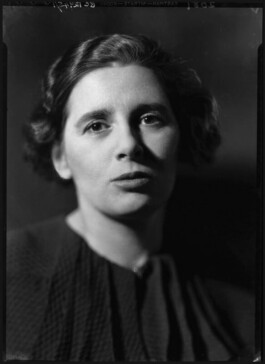
Dame Rebecca West (Cicily Isabel Andrews (née Fairfield)) by Howard Coster, © National Portrait Gallery, London, CC BY-NC-ND 3.0
Bonnie Kime Scott, ed., Selected Letters of Rebecca West (New Haven: Yale University Press, 2000)
Rebecca West, ‘I Said to Me’, The New York American (1931–1933)
Rebecca West, ‘Greenhouse with Cyclamens’, parts I-III, in A Train of Powder (London: Macmillan, 1955)
Carl Rollyson, Rebecca West: A Life (New York: Scribner, 1996)
Carl Rollyson, The Literary Legacy of Rebecca West (New York: Open Road Integrated Media, 2016). ProQuest Ebook Central