Most people today know of Vita Sackville-West because of her connection with Virginia Woolf. In the 1920s, however, the aristocratic Sackville-West was a well-known author in her own right. Her publications included the modernist novella Seducers in Ecuador (1924), a long narrative poem entitled The Land (1926), two travel books on Persia, and the bestselling novel The Edwardians which she began to write during her time in Berlin (it was published in 1930). She had travelled in the Middle East to join her husband Harold Nicolson, who had been appointed as a British diplomat in Teheran.
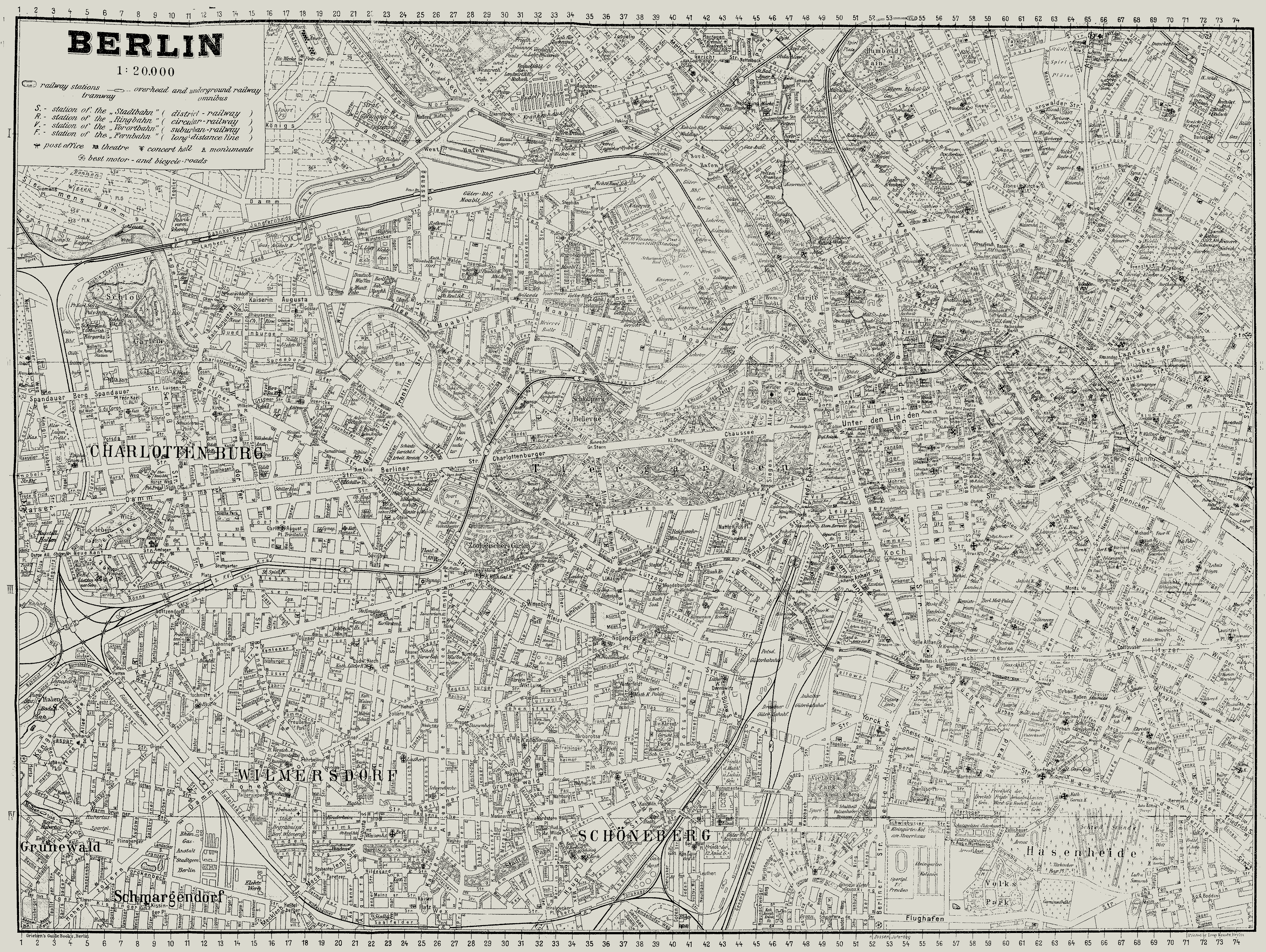
The same diplomatic connection brought Sackville-West to Berlin, where Nicolson took up a post in the British Embassy [link] in 1927. Early the next year she moved into the flat he was renting at 24 Brücken-Allee – a street in today’s Hansaviertel that no longer exists. It would be misleading, however, to imagine Sackville-West as leading the life of a well-behaved diplomat’s wife, moving in the shadow of her husband. For one, she wanted Nicolson to give up his diplomatic career. She also carried on with a number of intense love affairs with other women, including Woolf, who visited her there in January 1929, and the writer and translator Margaret Goldsmith [link] who fictionalised Sackville-West in her novel Belated Adventure (1929).
Vita’s letters from Berlin convey a decidedly mixed impression of the city. On 23 February 1929 she wrote to Woolf:
My darling Virginia,
I have been feeling so grim about Berlin that I have not had the heart to write any letters. If I wanted to describe what I felt about it, I should have to enlarge my vocabulary. And the cold! Thick snow, and the thermometer falling to nothing. I feel completely atrophied. […] True, there are the museums, and the Planetarium. […] There is also a lovely aquarium, and they play ice-hockey by artificial light, - have you ever seen ice hockey? – and the pictures are intoxicating – so you see I am trying to make the best of Berlin – also I have discovered a bookstall which deals entirely in homosexual literature, which sounds even funnier in German than it does in English. These are my compensations – but the rest is just black misery, and I shall have to be petted and coaxed back into equanimity. As for the idea of three years interlarded with large slabs of Berlin, it doesn’t bear contemplation.
As this letter shows, Sackville-West enjoyed exploring the lesbian subculture of Berlin, which was much more visible and outrageous than what she was used to in England. It is worth noting in this regard that her time in Berlin coincided with the banning, in England, of Radclyffe Hall’s lesbian novel The Well of Loneliness (1928), whose openness Sackville-West admired.
Sackville-West also profited from the literary connections she made in the city. In her letters to Woolf she stresses again and again the importance of her own writing projects, requests new books to review for Leonard Woolf, and she insists to be seen as a fellow writer rather than as a diplomatic wife. However, despite of her adventurous spirit and willingness to make new experiences, the urban grittiness of the city proved hard to endure for an author whose deep-seated connection with the English countryside, mythicised in The Land, found an outlet in her love of gardening and rural seclusion.
Still, Germany and the city of Berlin proved kind to her. The year Vita and Harold left Berlin, Ernst Wolfgang Freißler’s translation of Seducers in Ecuador appeared in the prominent Berlin-based journal Die Neue Rundschau. This publication marked the beginning of an intense activity of translation and dissemination of her writings in Germany. During her time in Berlin, Vita also worked on an English translation of Rilke’s Elegies from the Castle of Duino, supported by Margaret Goldsmith. It was published in 1931 together with her cousin Edward Sackville-West, another Berlin resident and peripheral member of the Bloomsbury Group. The shared connection with the city was one of the topics broached by the young Stephen Spender in his letters to her from Berlin. Stefano Evangelista and Gesa Stedman
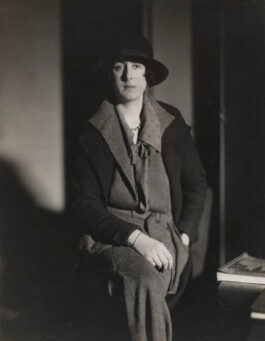
Vita Sackville-West by Howard Coster, © National Portrait Gallery, London, CC BY-NC-ND 3.0
Louise DeSalvo and Mitchell A. Leaska (eds), The Letters of Vita Sackville-West to Virginia Woolf (New York: William Morrow & Co., 1985)
Sackville West, Vita, Seducers in Ecuador (London: Hogarth Press, 1924)
Sackville West, Vita, The Land (London: Heinemann, 1926)
Sackville West, Vita, The Edwardians (London: The Hogarth Press, 1930)
Glendinning, Victoria, Vita: The Life of V. Sackville-West (London: Weidenfeld and Nicolson, 1983)
Martin, Alison E., ‘Bloomsbury in Berlin: Vita Sackville-West’s Seducers in Ecuador on the German Literary Marketplace’, Modernist Cultures, 13.1 (2018), pp. 77–95 [https://www.euppublishing.com/doi/full/10.3366/mod.2018.0195]